With the SportsCar Championship season finale approaching and the GT Open reaching its mid-season point before entering its decisive phase, I would like to take the opportunity to reflect on the past season and provide a brief outlook on the year ahead.
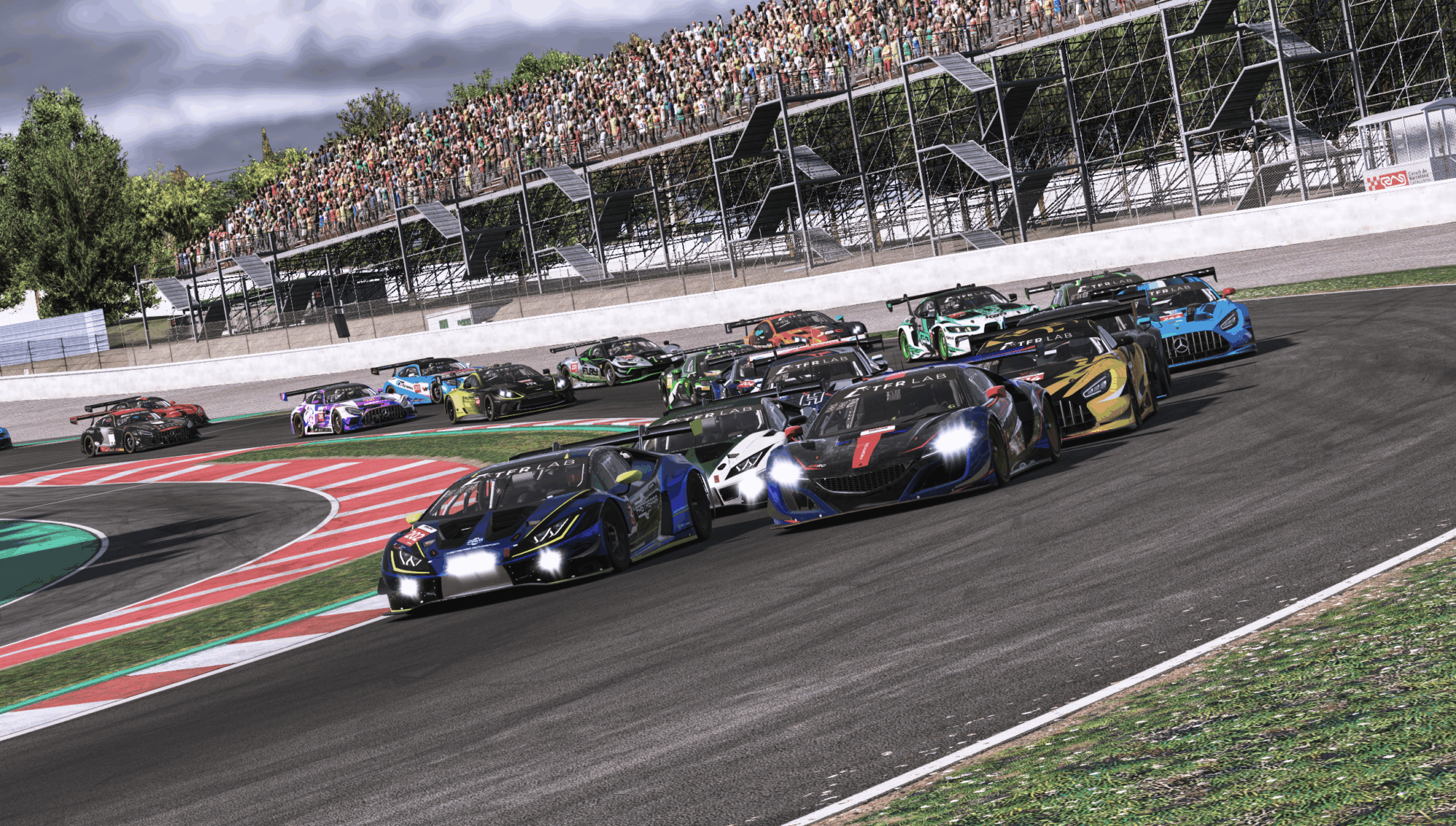
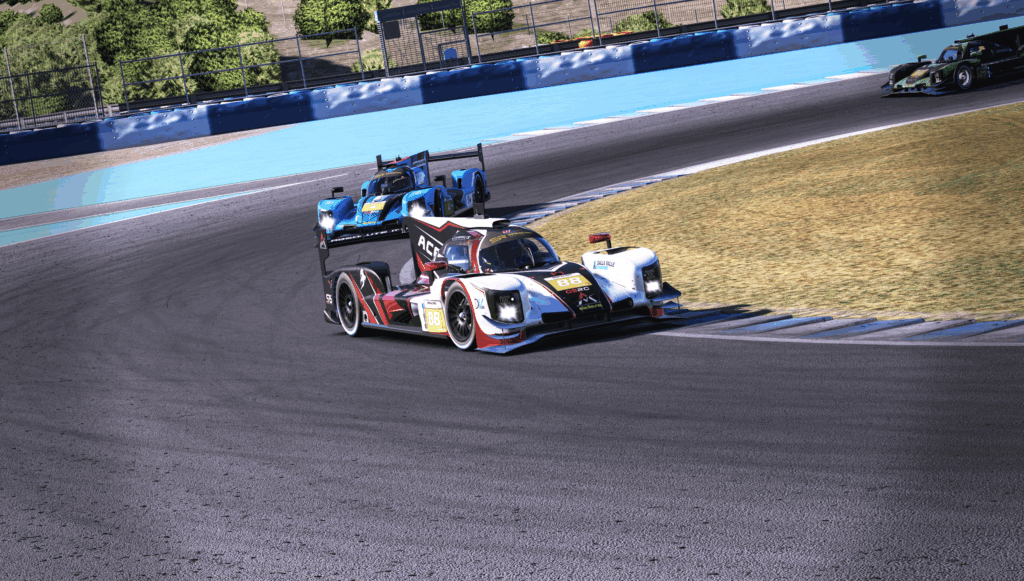
From my perspective, the SportsCar Championship has developed very positively over the past six months. Aside from the initial growing pains—both on the side of teams and drivers as well as within Race Control—the series has matured well. In particular, the last two rounds at Misano and Jerez were conducted with a high level of discipline. The racing was largely clean until the very end, and the finales were competitive and exciting. This is exactly what SimRacing Republic aims to stand for.
On the organizational side, we continuously strive to close potential loopholes as soon as they become apparent, while avoiding negative impacts on teams and deliberately minimizing major rule changes during an ongoing season. Unfortunately, very much against my personal preference, we had to introduce LMP3 class splits. In hindsight, however, this decision proved to be absolutely correct. While it does increase Safety Car duration, the upside is that restarts have improved significantly ever since. Or, to put it another way: beavers build the same dams all over the world—some solutions are universally applied because they work.
This is the point where I’d like to thank all Sponsors, especially Rdoks & GSRC as a rock-solid partners. The support & trust given from Rdoks is incredible and the Streams of GSRC are outstanding in the business.
But also the more “behind the scene” partners of TFRLab, Tim’s Coaching & iOverlay. We’re happy to move forward with such amazing people.
Overall, I believe we now have a solid foundation on which we can build for the future.
That said, a few adjustments will still be necessary to round out the overall package. For the upcoming season, we will expand from six to seven races, two of which will feature a six-hour race distance. A broad timeline is mid-September to mid/late April, with potential pre-qualification in early September. Registration will be open through the whole month of August.
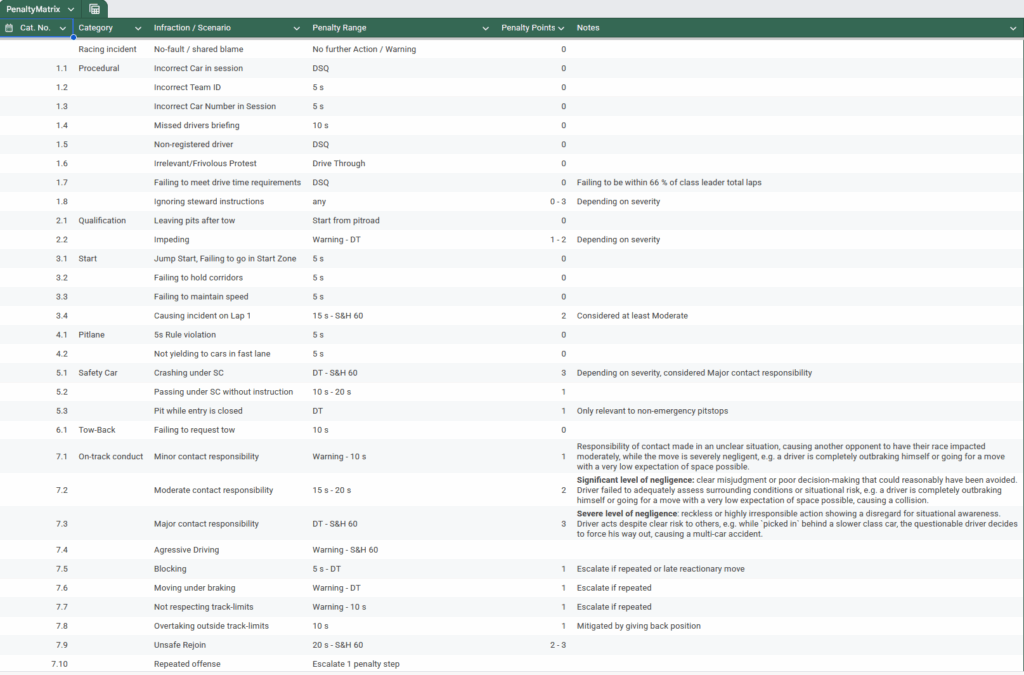
In addition, the penalty matrix will undergo a comprehensive overhaul, with a particular focus on ensuring proportionality between penalties. This requires introducing penalty levels between a warning and a drive-through. As part of this process, we will use the penalty-box method, where penalties below a drive-through have to be served during the next pit stop at the team’s own responsibility.
We will also revisit the drive-time requirements. Under the current regulations, using iRacing’s Fair Share rule, one driver of a two-driver team is only required to complete one eighth of the race distance to be classified. This is, in our view, insufficient and does not align with the team-based concept of the championship. Therefore, we will introduce a maximum driving time per driver of two thirds of the class-specific race distance (laps) across all classes. This change will also effect the current drive-time regulations in the AM class.
Finally, we will also adjust the Safety Car procedure. In the future, emergency pit stops will be permitted while the pit lane is closed. Drivers making a pit stop under closed pit conditions may have a maximum stationary time of five seconds to avoid a penalty. Violations will no longer result in an end-of-line penalty, but instead in a drive-through, in order to prevent strategic “gambling.” As part of this change, the pit entry will no longer be closed again after its initial opening.
Aside from these points, all other regulations will remain unchanged.
As a second main series, we plan to introduce a production-car style series starting in early autumn. This series will feature the latest Porsche 911 Cup, GT4 cars, and either the revised TCR class or the BMW M2. We plan on limiting this series to three vehicle classes. Whether we proceed with TCR or the M2 will largely depend on the TCR class’s ability to recover following its overhaul in iRacing 26 Season 2.
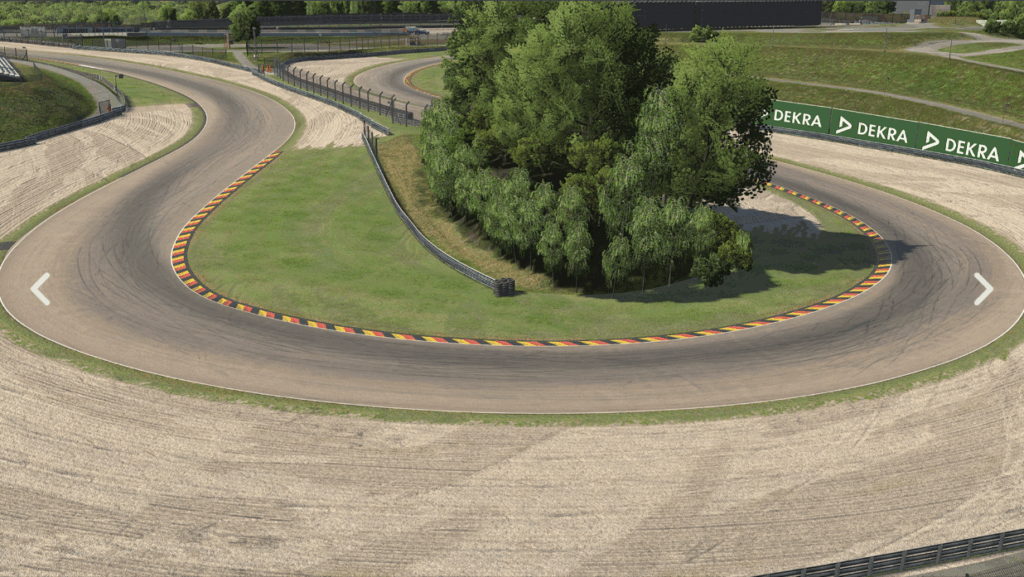
The series is planned to feature races of 2.4 and 4 hours, with a minimum of two drivers per team. The combination of those vehicle classes allows for greater flexibility in track selection. Alongside a number of major and popular circuits, we can place greater emphasis on more club-style tracks such as Snetterton, Oulton Park, Sachsenring, Mid-Ohio, and similar venues.
The regulations will largely mirror those of the SportsCar Championship, with only a few inevitable adjustments. Additionally, class winners will be given the opportunity to advance into SCC.
With these two series, we believe the SimRacing Republic will be well and comprehensively positioned for the future.
So what about GT Open?
I have spent a considerable amount of time thinking about how this series should be positioned and continued. After just the first two rounds, it was already clear to me that it could not remain a single-driver series. Should it continue, it would do so as a team-based championship, as originally intended.
SimRacing Republic is built around team-based racing in every aspect—from the rulebooks and Discord structure to our backend systems and live race control. Single-driver championships simply do not fit into the SRR ecosystem, as they introduce significant organizational disadvantages.
Another part of the reality is that we are currently not sufficiently staffed to manage three series simultaneously. We have found two more helping hands considering the organization of a third series. However more often than I would like, both GTO and the SCC are operating at the limit in terms of manpower. This obviously is due to personal real-life commitments, but we also had situations, where marshals were involved in other major leagues and therefore not available. Managing a third full series, without at least two or three more permanent commissioners is not feasible.
For this reason, I would once again like to ask for support in Race Control. We are able to pay a small contribution towards your accommodation costs. So anyone planning to not or only compete in one of the two main series next season is encouraged to consider supporting us and experiencing the other side of race operations.
For GT Open, this means that the series will not continue past this season unless we can secure at least two to three additional volunteers to support RC.
For so long, keep racing
Max